Haiku Format: The Rules, the 5-7-5 Pattern and How to Write One
What a haiku is, why English haiku use 5-7-5, how Japanese sound counting differs, what a season word and a cut do, and a step-by-step way to write your own.
The standard haiku format in English is three lines of five, seven and five syllables. That is the version taught in most classrooms and the one most readers recognise. It is also a simplification: the pattern comes from how Japanese poems are counted, and many modern poets now write shorter, looser haiku. This guide covers the classroom rule, what lies behind it, and a method for writing one that holds together as a poem and not just a syllable count.
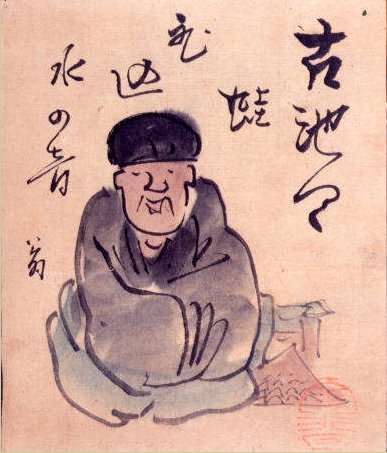
The classroom rule: three lines, 5-7-5
A haiku in the textbook form has three lines, which matches how the Haiku Foundation describes the form: "They are typically written in three lines." The first line has five syllables, the second has seven and the third has five again. The Haiku Foundation notes that "Five-seven-five haiku are probably the most popular form of haiku in English", so the rule is a fair starting point for a beginner.
Here is an original example, written for this site, with its syllable count beside each line:
| Line | Syllables |
|---|---|
| First frost on the step— | 5 |
| indoors a kettle whistles | 7 |
| someone is awake | 5 |
If you are unsure how many syllables a word has, tap out the beats as you say it (how to count syllables explains the method). The haiku checker will count a whole poem line by line, and the syllable counter handles single words or lines.
Where 5-7-5 comes from, and why Japanese counting differs
The form began in Japan. Haiku began as the opening verse (hokku) of renga, a Japanese linked poem. From the time of Matsuo Bashō (1644–1694) the hokku also appeared as a poem in its own right. In the late 19th century Masaoka Shiki gave the standalone form the name haiku, as the Wikipedia article on hokku explains.
The 5-7-5 count comes from Japanese sound units, and those are not the same thing as English syllables. The Australian Haiku Society puts it this way: "Japanese morae or phonetic units do not correspond to English syllables." It adds that Japanese units "comprise very short sounds, whereas English syllables tend to be much longer".
The same page reports that "Studies have shown that approximately twelve syllables in English is equivalent to the duration of seventeen Japanese morae". Seventeen is the usual total for a Japanese haiku (5 + 7 + 5), so an English poem with seventeen syllables usually says more, and takes longer to say, than the Japanese original. That is the main reason 5-7-5 is a convention in English and not a strict law of the form.
How modern poets treat the rule
Many working haiku poets have moved away from the fixed count. The Haiku Foundation says that "most poems are not in the five-seven-five pattern" in English-language anthologies and journals, and describes contemporary haiku as having "a total of seventeen syllables or less, usually ten to twelve syllables."
The two statements fit together: 5-7-5 is the most common form in schools and popular culture, while most haiku in journals are shorter. The Australian Haiku Society agrees that 5-7-5 can work, but notes that "the trend in English language haiku is towards brevity."
For a student, this means two things. If your teacher asks for 5-7-5, write 5-7-5 and count carefully. If you are writing for yourself, you can let the poem be as short as the moment needs. Here is the frost poem again, trimmed, with no fixed count:
first frost—
indoors, a kettle
whistles
The season word and the cut
Syllables are the least interesting part of a haiku. Two other features carry more of the form.
The season word
The Haiku Foundation defines it plainly: "A season word is a word or phrase that provides a seasonal context for the poem." The Japanese term is kigo. In the example above, frost points to the cold part of the year without naming a season. Words such as blossom, cicada or harvest moon work the same way. A season word is a concrete image, so it also keeps the poem anchored to something you can see.
The cut
In Japanese haiku the cut is marked by a kireji, or "cutting word". It divides the poem into two parts. The Haiku Foundation describes a traditional Japanese haiku as "often divided into two asymmetrical parts that do not make a complete sentence." What the cut does is make the reader link two separate images. In the frost poem, the dash after the first line is the cut: an outdoor image (frost on the step) comes first, then an indoor sound (a kettle whistling). The poem never says how they connect, so the reader does that work, and that gap is where the poem lives.
How to write a haiku, step by step
- Start with something you noticed. Pick one small moment from today: a frosty step, a bus window, a kettle. Skip feelings and ideas for now. A haiku works best when it shows a thing and lets the reader feel the rest.
- Choose a season word. Ask which time of year the moment belongs to and name one concrete detail that says so. Here it is frost.
- Write it plainly, in any length. Put down what you saw in ordinary words. Do not count yet. For example: The first frost has covered the back step. In the kitchen the kettle is whistling. Someone is already awake.
- Find the cut. Decide where the poem pivots between two images, and put a dash or a line break there: The first frost has covered the back step— / in the kitchen the kettle is whistling / someone is already awake.
- Fit it to the pattern if you need to. Count each line and trim or swap words until you reach five, seven and five. Here that means cutting has covered the back and already, and swapping kitchen for indoors. The result is the poem in the first table.
- Check the count, then read it aloud. Run the lines through the haiku checker, then read the poem aloud. If it sounds padded, cut a word and accept a shorter line.
Common mistakes
- Filling lines with filler. Adding "very" or "so" to reach seven syllables weakens the image. Change the image or drop the count instead.
- Explaining the feeling. "I felt so lonely" tells the reader what to think. A description of an empty chair lets them think it.
- Miscounting words. Words such as fire, poem or every are counted differently by different speakers. See disputed syllable counts for how to handle them.
- Treating the count as the whole form. A poem with seventeen syllables and no image, season or cut is a short piece of text, not much of a haiku.